
Understanding Off-Platform Movement
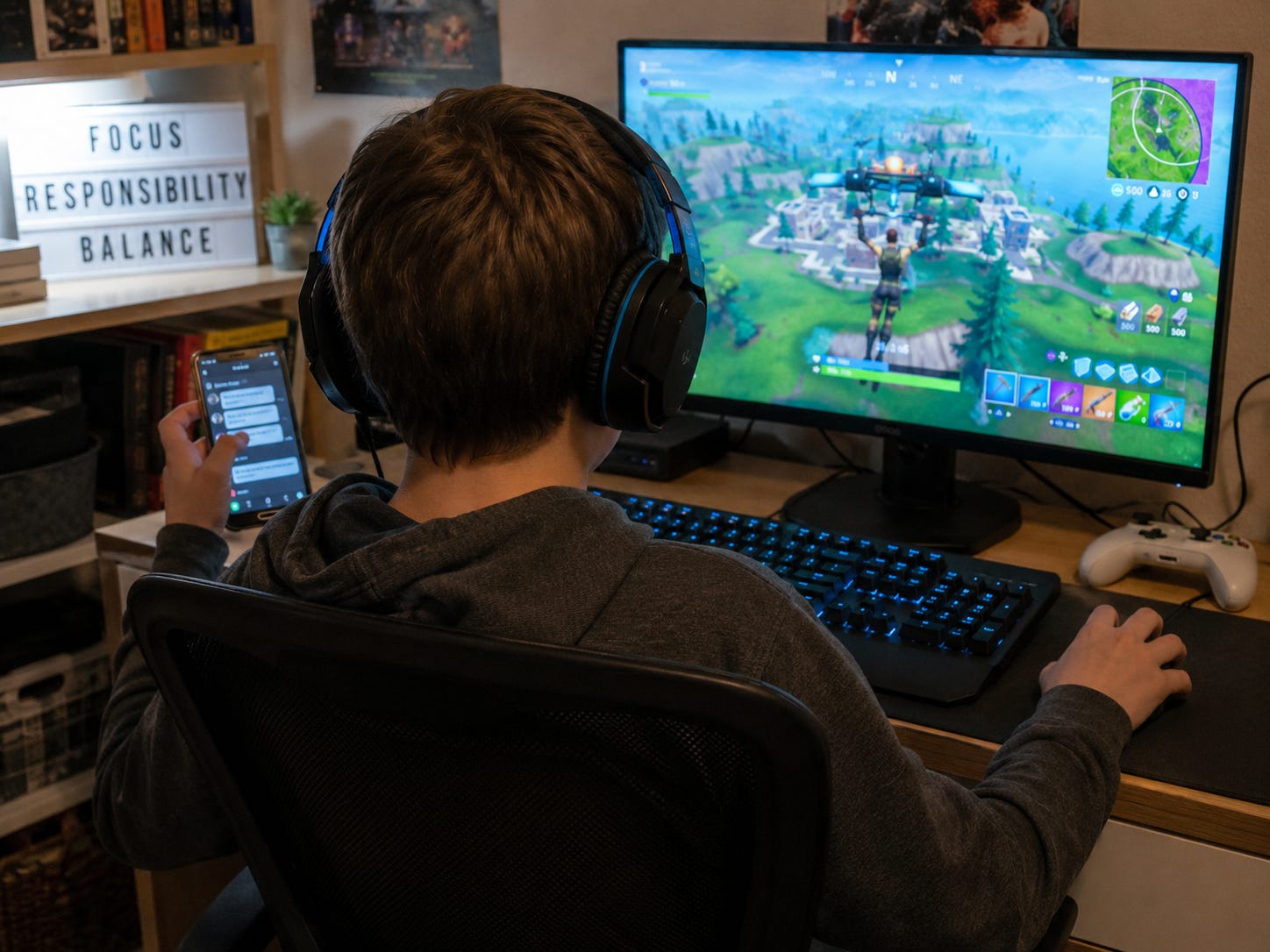
The waiting room: A child sitting on the couch, controller in hand, is not alone.

The Exit Door Inside the Screen
They are in a room with millions of strangers, and the door has no lock.
Parents watch the console, not the pipeline. That is the mistake. The couch feels safe because it is inside the house, under the light, within earshot.
Safe is a feeling. It is not a fact.
Predators do not linger in the open chat. That space is watched, logged, and reported. They know this. So they use the public lobby the way a con artist uses a busy street corner: to find a mark, not to close the deal.
They watch. They look for the child who plays alone, who talks too much, who mentions a fight at home or a parent working late. They are not confused about who is vulnerable. They know exactly who they are looking for.
Then they gift. In-game currency. A skin. A weapon pack. Small things that cost nothing and mean everything to a ten-year-old who has been asking for it for weeks. This is not kindness. This is a down payment.
The Waiting Room
Once trust is built, the move happens fast.
“Add me here. It is easier to talk on this app. I will send you the code.”
This is the pipeline. It has a name: off-platform movement. It is not random, it is not accidental. It is a method used again and again, refined across thousands of children because it works.
The private app is chosen for a reason. Encrypted. Disappearing messages. No parental report button. No moderator. The public game was never the danger. It was the waiting room.
Parents check screen time. Parents check age ratings. Parents feel finished once the console is in the family room instead of the bedroom. None of that touches this. The danger was never the game. It was always the exit door built into the game, the one leading to a private chat with no adult in the room.
In my work navigating the aftermath of digital abuse and trauma, I have see this exact sequence play out. The architectural trap springs long before a parent even realises a boundary has been crossed. How would we know? We didn’t live in this world.
Exposing the System
Ask a child what happens when a stranger online offers something free. Most will say take it, obviously, why wouldn’t you. They are not being reckless; they simply have not been shown the mechanism. Nobody explained that "free" is the first move in a longer play.
We need to change how we explain this to them. Don't just tell them to look out for "bad guys."
Expose the system.
Here is what you could say to your child tonight:
"If someone you are playing a game with offers to buy you skins or coins, and then tells you to keep it a secret or move to a different app to talk about it, they aren't being nice. They are trying to trick you into stepping into a space where the game's safety rules don't work. If that happens, you aren't in trouble. You just hit the power button and come tell me so we can block the pipeline together."
You know how to speak to your child, lean into the best way that works for them.
Awareness is the Shield
This is not about fear. Panic does not protect a child; awareness does. The difference between a parent who catches it and one who doesn’t is not luck. It is knowing the shape of the pipeline before the child steps onto it.
Watch for the invite to move platforms. Watch for new gifts appearing with no explanation. Watch for a child who suddenly has a new best friend they met online, who knows things about the family, the schedule, the school run. Watch for secrecy where there used to be none.
This is not a conversation you have once. It is not a settings menu you configure and forget. The pipeline gets rebuilt on every new game, every new app, every update. The predators adapt faster than the platforms do.
A locked bedroom door was once the thing parents worried about. Now the door is inside the screen, and it opens onto a room with no walls, no witnesses, and no way back once a child has stepped through it.
This is not something I ever imagined I would write about. But it is real. It is happening in real time. And that is the part that sits heavy with me, because most of us live as if danger only reaches other homes, other children, other families. We do not think it will touch ours. I hope it never does. I hope no parent ever has to learn about online safety because something has already gone wrong.
But if there is even one chance to make a parent pause, check, ask, listen, look closer, or protect their child sooner, then I will speak about it.
Children are online every day. Gaming, messaging, chatting, joining groups, trusting voices they cannot see. And we cannot afford to look away.
Awareness is protection.
With love,
Zen x